Rafael Zimmermann · 13 November 2026
Genetic Factors Drive Route Choices Among Woodland Insect Groups Amid European Habitat Shifts
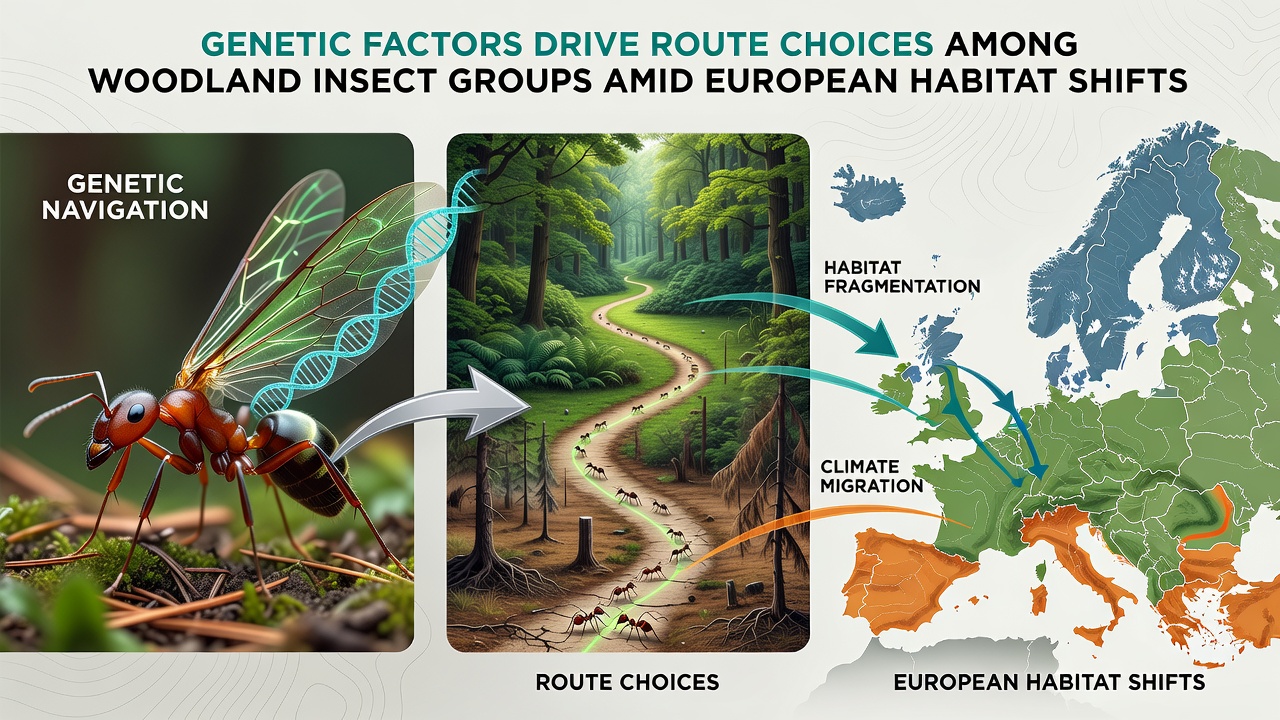
European forests have undergone measurable changes in structure and connectivity over recent decades, and researchers tracking insect movement patterns report that genetic variations influence which routes different groups select when navigating these altered landscapes. Studies conducted across multiple sites in central and northern Europe indicate that certain alleles associated with navigation and sensory response appear more frequently in populations that consistently favor specific trail types, such as those along fallen logs versus open leaf litter corridors.
Habitat Changes Reshaping Movement Patterns
Climate-driven warming combined with land-use modifications has fragmented many woodland areas, creating new barriers and openings that insects must cross or avoid. Data from long-term monitoring programs show increased temperatures have accelerated canopy thinning in some regions while promoting undergrowth density in others, and insect groups respond by altering their daily foraging and dispersal paths. In November 2026, updated satellite imagery combined with field observations confirmed that several beetle and ant species have shifted activity windows earlier in the season to match cooler microclimates along shaded routes.
Genetic sampling reveals that populations inhabiting these changing zones carry distinct marker sets linked to olfactory receptor genes and visual orientation abilities. One multi-year project coordinated across Poland, Germany, and Sweden collected tissue from thousands of individuals and found that insects preferring routes with higher humidity levels possessed variants in genes regulating moisture detection, whereas those using sunnier clearings showed differences in phototaxis-related sequences.
Evidence from Field and Laboratory Work
Controlled experiments in replicated enclosures demonstrated that offspring of route-preferring parents retained similar choices even when raised in standardized environments, pointing to heritable components rather than purely learned behaviors. Researchers mapped these preferences against landscape variables including soil moisture, vegetation density, and light penetration, then cross-referenced results with genomic data. The findings indicate that selection pressure from habitat shifts favors certain genotypes that improve survival during dispersal across gaps or along edges.
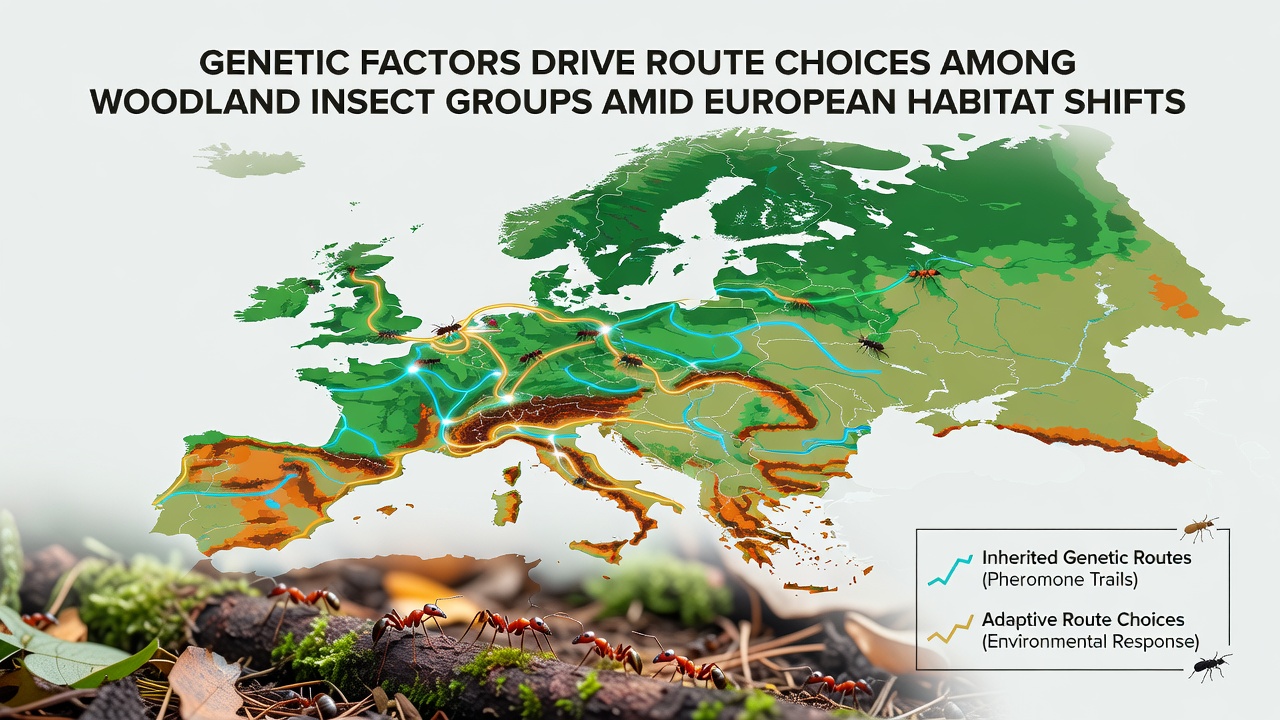
What's interesting is how quickly these genetic patterns emerge in response to relatively recent changes. According to reports from the European Environment Agency, forest fragmentation rates have risen steadily since the early 2000s, and parallel insect surveys document corresponding increases in route specialization within affected populations. In one case study from the Carpathian foothills, a group of ground-dwelling beetles showed elevated frequencies of a particular navigation allele within just five generations after a major storm opened new light gaps.
Broader Implications for Insect Communities
Similar patterns appear in butterfly and moth groups that rely on woodland edges for migration between patches. Genetic analyses conducted by teams at several European universities have identified correlations between trail selection and metabolic genes that influence energy efficiency during longer traversals. These associations help explain why some populations maintain stable numbers while others decline when routes become less predictable due to shifting vegetation.
Observers note that the interaction between genetics and environment creates feedback loops: insects carrying advantageous alleles reach resource-rich areas more reliably, increasing the chance those alleles spread within the local gene pool. Laboratory crosses between high- and low-preference lines produced intermediate behaviors, confirming additive genetic effects rather than single-locus control. Field teams continue to monitor whether ongoing warming will further amplify these divergences or introduce new selective pressures.
Additional data from Canadian forest ecology programs, which track analogous boreal species, provide useful comparisons showing that genetic route biases also appear in North American systems facing parallel habitat pressures. Such cross-continental patterns suggest the mechanism operates across temperate woodland insect communities wherever fragmentation alters available pathways.
Conclusion
Genetic factors clearly contribute to the route choices observed among various woodland insect groups as European habitats continue to shift. Continued monitoring and genomic work will clarify how rapidly these adaptations propagate and whether they buffer populations against further environmental change or create new vulnerabilities when conditions move outside current ranges.